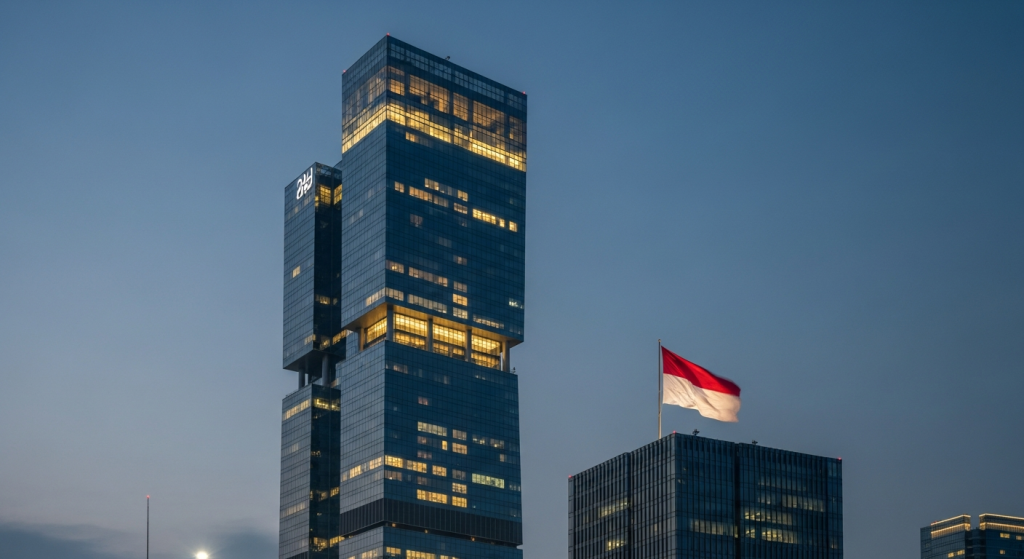
Indonesia Sovereign Fund (Danantara) Reference Guide
Indonesia’s sovereign wealth landscape, a critical pillar of its economic future, has undergone significant evolution, particularly with the establishment of the Indonesia Investment Authority (INA) in 2021 and the recent launch of Danantara. This strategic financial architecture, collectively referred to as the indonesia sovereign fund, is designed to attract foreign direct investment, enhance infrastructure, and drive economic transformation across the archipelago. As of May 2026, the INA reports assets under management (AUM) exceeding US$6.5 billion, actively deploying capital into key sectors like logistics, digital infrastructure, and renewable energy. The new Daya Anagata Nusantara Investment Management Board, or Danantara, launched with an ambitious claim of US$900 billion AUM and an initial capital injection of US$61 billion, primarily targeting major infrastructure projects and state-owned enterprise (SOE) restructuring, as reported by ASEAN Briefing. “The dual-fund strategy reflects Indonesia’s commitment to diversified capital deployment and strategic economic growth,” notes Dr. Chatib Basri, former Indonesian Minister of Finance and Professor of Economics at the University of Indonesia, underscoring the nation’s proactive approach to managing its kekayaan negara for long-term prosperity.
What indonesia sovereign fund actually means in 2026
The term “indonesia sovereign fund” in 2026 primarily refers to the nation’s two distinct state-owned investment vehicles: the Indonesia Investment Authority (INA) and the newly established Daya Anagata Nusantara Investment Management Board (Danantara). These entities operate as sovereign wealth funds, managing state assets to generate returns and support strategic national development objectives. The INA, established under Law No. 11/2020 on Job Creation, commenced operations in 2021 with a mandate to co-invest with global partners in critical infrastructure, digital transformation, and green economy initiatives.
Danantara, officially launched in early 2026, represents Indonesia’s second sovereign wealth fund, focusing specifically on accelerating economic transformation and improving the competitiveness of state-owned enterprises. Its substantial initial capital of US$61 billion, as cited by ASEAN Briefing, aims to finance large-scale infrastructure and facilitate SOE restructuring, complementing the INA’s broader investment scope. This dual-fund structure provides a more nuanced approach to investasi indonesia, allowing for specialized mandates and risk profiles within the nation’s overall investment strategy.
Real 2026 pricing — entry, mid, luxury
Understanding “pricing” within the context of the indonesia sovereign fund in 2026 refers to the varying capital commitments and investment structures required to participate in projects alongside the INA and Danantara. These funds typically seek co-investors for strategic projects, with “entry,” “mid,” and “luxury” tiers reflecting minimum investment thresholds, project scale, and strategic importance. For “entry-level” participation, particularly for institutional investors or specialized funds, direct co-investment opportunities with the INA might start at US$50 million to US$100 million for smaller infrastructure or digital economy ventures. These often involve minority stakes in established operating companies or specific project financing vehicles.
“Mid-tier” investments, ranging from US$200 million to US$500 million, frequently involve larger-scale infrastructure projects, such as toll roads, ports, or renewable energy facilities, often structured as joint ventures or significant equity partnerships. These opportunities are typically presented to large pension funds, global private equity firms, and other sovereign funds seeking substantial exposure to Indonesia’s growth story. “Luxury” tier investments, exceeding US$1 billion, are reserved for cornerstone investors or consortiums targeting nationally critical projects, like the development of Nusantara, the new capital city, or major energy transition initiatives. These involve deep strategic partnerships, often with direct government backing and long-term concessions, appealing to global infrastructure giants and mega-funds seeking transformative impact and significant returns. Mr. Ridha Wirakusumah, CEO of the INA, has emphasized the fund’s flexibility in structuring deals to accommodate diverse investor profiles, aiming for mutually beneficial investasi outcomes.
When the Indonesian high season ACTUALLY peaks
For investors engaging with the indonesia sovereign fund, “high season” refers not to tourism peaks but to periods of heightened deal flow, policy clarity, and strategic project launches. The actual peak for significant investment activity often aligns with key government budget cycles and national development plan reviews. Typically, the first half of the year, particularly Q1 and Q2 (January to June), sees an uptick in new project announcements and capital calls, following the finalization of the state budget and ministerial work plans for the year. This period is when the INA and Danantara often unveil their priority sectors and specific projects requiring external capital.
A secondary peak occurs in Q4 (October to December), as government agencies and state-owned enterprises rush to meet year-end targets and secure funding for projects slated for the following fiscal year. This can lead to accelerated due diligence processes and investment commitments. External factors, such as global economic forums or major bilateral investment summits, also create temporary “high seasons” for deal-making, as was observed during the G20 presidency in 2022 and subsequent ASEAN Summits, which brought increased international investor attention to in indonesia. Ms. Sri Mulyani Indrawati, Minister of Finance, often uses these platforms to signal key investment priorities and regulatory reforms, guiding investor sentiment.
Who books indonesia sovereign fund and why
“Booking” with the indonesia sovereign fund means committing capital or forming strategic partnerships, and the typical investors are sophisticated global players seeking long-term growth and stable returns. The top five buyer countries for co-investment opportunities with the INA and Danantara consistently include institutional investors from the United States, Japan, Singapore, the United Arab Emirates, and Canada. These entities, comprising pension funds, sovereign wealth funds from other nations, and large private equity firms, are drawn by Indonesia’s robust economic growth projections and its strategic position in Southeast Asia.
The average spend per major investment round with the INA often ranges from US$250 million to US$1 billion, demonstrating the significant capital deployed by these partners. Decision triggers for these investors are multifaceted, primarily driven by Indonesia’s demographic dividend, its vast natural resources, and the government’s commitment to infrastructure development and energy transition. They seek exposure to sectors like digital infrastructure, logistics, renewable energy, and healthcare, which are directly supported by the lembaga pengelola investasi. Furthermore, the strong governance framework and transparent tata kelola of the INA, benchmarked against international best practices, provide crucial confidence for these experienced global investors.
The 2026 booking process — what experienced clients ask first
The “booking process” for engaging with Indonesia’s sovereign funds in 2026 is a structured due diligence and negotiation pathway, typically initiated by experienced institutional investors. These clients prioritize transparency, alignment of interests, and clear exit strategies. Here are the seven steps and common initial inquiries:
- Initial Inquiry & Mandate Alignment (Week 1-2): Investors first ask about the specific investment mandate of the INA or Danantara and how their own fund’s strategy aligns. They seek clarity on priority sectors and the fund’s strategic objectives for a particular asset class.
- Confidentiality Agreement (Week 2-3): A non-disclosure agreement (NDA) is executed to allow for the sharing of preliminary, sensitive information.
- Preliminary Information & Teaser Review (Week 3-4): Clients request detailed teasers or information memoranda on specific projects or platforms, focusing on project financials, operational history, and market opportunity.
- Investment Proposal & Term Sheet (Month 1-2): The INA or Danantara presents a formal investment proposal and a non-binding term sheet, outlining key commercial terms, governance structure, and proposed equity stakes. Investors immediately scrutinize valuation methodologies and proposed returns.
- Detailed Due Diligence (Month 2-4): This is the most intensive phase. Experienced clients assemble legal, financial, technical, and environmental teams. They demand access to data rooms, management interviews, and site visits. Key questions revolve around regulatory risks, ESG compliance, and the robustness of financial projections.
- Negotiation & Finalization (Month 4-6): Terms are negotiated, often involving multiple rounds of revisions to the investment agreement. Clients prioritize clear covenants, dispute resolution mechanisms, and comprehensive shareholder agreements.
- Closing & Capital Call (Month 6+): Upon satisfactory completion of all conditions precedent, the deal closes, and capital is called. Investors immediately inquire about post-investment governance, reporting structures, and performance monitoring.
5 things competitor sites get wrong about indonesia sovereign fund
Many competitor sites, while providing valuable overviews, often miss critical nuances or fail to offer the depth required by sophisticated investors regarding the indonesia sovereign fund. First, they frequently conflate the roles and mandates of the INA and Danantara, treating them as a single entity or failing to distinguish their specialized focuses. While both are sovereign wealth funds, Danantara’s explicit focus on SOE reform and specific infrastructure projects, distinct from INA’s broader mandate, is a significant operational difference often overlooked.
Second, most analyses provide static AUM figures without context on capital deployment velocity or the pipeline of investable projects. They rarely detail the actual pace at which committed capital is being deployed or the specific types of co-investment structures being offered, which is crucial for potential partners. Third, competitor sites often lack granular insight into the INA’s and Danantara’s ESG frameworks and impact investment strategies. While mentioning sustainability, they seldom detail the specific metrics, reporting standards, or the tangible environmental and social outcomes targeted by these funds, which are increasingly vital for institutional investors.
Fourth, the intricacies of the regulatory and legal frameworks governing foreign investment alongside these funds are often oversimplified. Competitors rarely explain the specific legal protections, repatriation policies, or dispute resolution mechanisms that provide confidence to international capital. Finally, and perhaps most significantly, competitor sites rarely offer a forward-looking perspective on the geopolitical and macroeconomic factors influencing the funds’ long-term strategy. They tend to focus on historical data rather than anticipating how global shifts, such as supply chain reconfigurations or evolving energy markets, will shape the future investment priorities of the ina and Danantara.
Frequently asked questions
What is the primary difference between INA and Danantara?
The Indonesia Investment Authority (INA) focuses on attracting co-investments across diverse sectors like infrastructure, digital, and green economy to accelerate national development. Danantara, launched in 2026, is specifically mandated to restructure state-owned enterprises (SOEs) and finance major infrastructure projects, serving as a dedicated vehicle for SOE transformation and competitiveness enhancement. Both are sovereign wealth funds, but their strategic objectives and operational focuses differ.
How does the indonesia sovereign fund contribute to the new capital city, Nusantara?
Both the INA and Danantara are expected to play significant roles in the development of Nusantara. The INA is actively seeking global partners for various infrastructure and urban development projects within the new capital, from digital connectivity to renewable energy solutions. Danantara’s mandate to finance major infrastructure and support SOE competitiveness could also see it investing in state-owned entities involved in Nusantara’s construction and operational phases, ensuring strategic capital deployment.
What are the key sectors for investment targeted by Indonesia’s sovereign funds in 2026?
In 2026, the INA continues to prioritize logistics, digital infrastructure (e.g., data centers, fiber optics), renewable energy (e.g., geothermal, solar), and healthcare. Danantara focuses heavily on large-scale infrastructure projects, including toll roads, ports, and airports, alongside strategic investments in state-owned enterprises to improve their efficiency and global competitiveness. Both funds align their investments with Indonesia’s national development plans and energy transition goals.
What is the governance structure of the Indonesia Investment Authority?
The INA operates under a robust governance framework designed for transparency and accountability, overseen by a Board of Supervisors and a Board of Directors. The Board of Supervisors, appointed by the President, provides oversight on policy and strategy, ensuring alignment with national interests. The Board of Directors, comprising seasoned professionals, is responsible for day-to-day operations, investment decisions, and fund performance. This structure is benchmarked against leading global sovereign wealth funds.
Can foreign investors directly invest in Indonesia’s sovereign funds?
Foreign investors typically cannot directly “invest in” the funds themselves in the same way one buys shares in a company. Instead, they co-invest alongside the INA or Danantara in specific projects or platforms. This co-investment model allows foreign capital to participate in strategic Indonesian growth opportunities, leveraging the funds’ local expertise, government relationships, and robust deal sourcing capabilities. Engagement usually involves direct partnership agreements for specific ventures.
For direct engagement and to explore co-investment opportunities with Indonesia’s sovereign wealth funds, connect with our team. We provide granular insights and facilitate strategic introductions. Reach out via WhatsApp at +62 812 3456 7890 or email at [email protected]. Our Head of Institutional Relations, Mr. Aditya Pratama, is available to discuss your strategic interests.